
Assessment appointments for ADHD and autism can take place at any of our clinic locations across Cheshire.
In order to prepare your child for their appointment(s) please show them the relevant photo story or video for the location stated in your appointment letter. This can be found in the list below.
Should you have any access requests or require a language or BSL interpreter please email your request to the team at least a week prior to your appointment date at cwp.aatcheshire@nhs.net
ADHD assessment information
QbTest is a widely used and well documented objective tool that measures your activity level, ability to concentrate and impulse control. Together with other information, such as rating scales and a clinical interview, QbTest will help your clinician assess you for ADHD. When used as follow up test, QbTest will help to evaluate the effectiveness of ADHD treatment.
What is QbTest?
QbTest is a computer based test that combines attention and impulse control measurements with activity recordings collected by an infra-red camera. Your test results are compared with a group of children of the same age and gender, who do not have ADHD.
Why should I take a QbTest?
As part of your overall assessment, QbTest results will provide valuable and objective information to help determine:
- If you have ADHD or not
- If you are on ADHD medication, how you respond to treatment
How is the test performed?
The test is performed on a computer and takes 15 or 20 minutes. The test equipment consists of an infra-red camera, a head band with a reflective marker and a response button (see below). During the test a number of symbols are shown on the computer screen and the task is to push the button when a certain symbol appears on the screen.
The test is easy to perform and you will receive instructions during the appointment. The test is not dependent on knowledge of English, nor will reading or mathematical skills affect the results.
Once testing is completed, the results will be interpreted by the clinician, who will discuss the test alongside other information during your next appointment.
QbTest alone will not tell you nor the clinician if you have ADHD.
For more information about the test please contact your clinician or involved staff member or visit our web site, www.qbtech.com.
FREQUENTLY ASKED QUESTIONS
Is QbTest validated?
Yes, QbTest is well documented, widely used and registered or cleared by all concerned authorities, including The European Medicines Agency (EMA) and The Food and Drug Administration (FDA) in the US.
Will I know if I have ADHD after the test?
No, the results are not as straightforward as other medical tests (such as a blood test or x-ray) and need to be interpreted carefully as part of a whole assessment in order to diagnose ADHD.
Will I be recorded during the test?
No, the camera does not record images but only the movements of the reflective marker. In addition, no individual test data will in any form be transferred or in any other manner be made available to third parties.
Does computer gaming experience affect the test results?
No, there is no link between video game experiences and test results.
The test itself requires no computer knowledge or skill and should be seen as a task and not a video game.
Could QbTest be useful for patients already using ADHD medication?
Yes, research and clinical experience show that patients with ADHD respond differently to medication. In some cases, medication may have a positive effect. In other cases it could have a partial effect or no effect at all, due to a suboptimal dosage or type of medication. QbTest is a tool to aid a clinician in optimising the treatment for your individual needs
QbTest Patient Information Child _UK_A
Information for Parents
This document is intended to provide an overview to parents whose children may benefit from a QbCheck.
QbCheck is a test designed to identify those children who should receive additional support within the classroom, and for whom a referral for a specialist ADHD evaluation may be required. Attention Deficit/Hyperactivity Disorder (ADHD) is a common condition that affects 3-5% of children1 , which means that in a typical class of 30 it is likely that 1 or 2 children will have ADHD.
The signs of ADHD include having difficulty concentrating, not seeming to listen or following instructions, forgetfulness, acting without thinking, interrupting others and fidgeting with hands or feet. However, every child is different, and many children exhibit such behaviour from time to time, this does not mean they have ADHD.
And whilst parents and teachers may notice that a child is behaving differently from their peers, it remains challenging for both to identify those who may be affected by ADHD, leading to possible delay and inaction. Which is of concern, keeping in mind the negative impact ADHD can have on a child’s ability to learn, build friendships and maintain self-esteem. By identifying ADHD early, it is possible to provide effective support for children and their families and help pupils realise their potential. To help teachers and parents to minimise the time from first concern about ADHD to appropriate support, your school has adopted QbCheck, an FDA and MDR-cleared objective test.
QbCheck
QbCheck is a computer-based test that objectively measures the 3 core symptoms of ADHD - activity, inattention and impulsivity. Your child’s test result is compared with children of the same age and sex at birth, who have ADHD and those who do not.
The test is performed on a computer at school and takes 15 to 20 minutes. During the test a number of symbols are shown on the computer screen and the task is to push the button when a certain symbol appears on the screen.
QbCheck cannot identify ADHD by itself, but the comparison to the age and gender matched groups will tell you the likelihood of ADHD like symptoms and if a specialist ADHD assessment should be sought. In other words, through QbCheck, school staff and parents will be informed to act upon ADHD.
QbCheck is built on the NICE recommended, QbTest, which is currently used in 80 NHS trusts across approximately 150 clinics in England. QbTest helps healthcare professionals to diagnose, treat and monitor ADHD in patients 6 and 60 years.
For more information, please refer to the FAQs below or feel free to contact your school lead via the school office or Qbtech at enquiries.qbcheck@qbtech.com
Frequently asked questions
How might QbCheck help my child?
By identifying if and why your child presents with difficulties related to attention, impulsivity and activity at an early stage, suitable support as well as classroom strategies can be implemented sooner. This is likely to enhance your child’s development and ensure a happy and positive learning environment.
How will a school decide who to test?
If your child is invited for a QbCheck, the final decision on whether to proceed will be made by you. Generally, only those children who are already giving cause for concern will receive a QbCheck. Reasons of concern may include:
- Falling behind with expected progress, showing inconsistent achievements
- Difficulty maintaining focus on task, easily distracted
- Dreamy, quiet behaviour, required regular prompting to engage
- Being very impatient, having difficulty waiting for things
- Talking nonstop
- Not seeming to listen when spoken to
- Struggling to follow instructions
- Difficulties sitting still
- Difficulties making or maintaining friendships
- Disruptive, impulsive or challenging behaviour (e.g. acting without thinking, interrupting others)
- Having a sibling diagnosed with ADHD
I’ve been trying to have my child assessed for ADHD, how will QbCheck help?
QbCheck will provide objective information about your child’s likelihood of displaying ADHD-like symptoms, which will be helpful in ensuring suitable home and/or school support as well as a referral to a specialist service, if appropriate.
Who will know if my child has been tested?
Your child’s information will be anonymised and therefore only you, as parent(s), your child’s teacher and involved school staff will be informed. As a parent you might be invited to share experiences with others, but no information about your child with be shared with third parties without permission.
When and how will I receive the QbCheck results?
Every school has an internal process when it comes to providing results. Some may choose to discuss and explain the results during a meeting at school or by phone. It is advised to discuss the process with either your child’s teacher, SENCO or school lead.
What will happen with the results?
Depending on your school’s policy the results may be used to put classroom and home strategies in place and/ or to initiate a referral for a specialist (ADHD) assessment. It is advised to discuss this process with either your child’s teacher, SENCO or school lead.
What else could I expect?
Depending on your school’s policy additional information about your child may be requested. Some schools may ask parents to complete questionnaires or gather information during a meeting or by phone. Please refer to your child’s teacher, SENCO or school lead to discuss the options.
As part of the diagnostic process for ADHD which follows NICE guidelines, your parent interview, your child’s Qb Test and other information such as from school and/or other health professionals will be reviewed by a Consultant Psychiatrist.
This process takes time and currently there is around a 3-4 month wait for a diagnostic decision following your child’s ADHD assessment appointment.
When your child’s ADHD assessment has been reviewed, we will contact you with an appointment to offer feedback to you and your child. This maybe a face to face appointment at Elm House or a telephone appointment with a Consultant Psychiatrist. You and your child will have the opportunity to ask any questions you may have, you may wish to write them down before the appointment, so you don't forget them.
An ADHD assessment and outcome report will be sent to you after the feedback appointment explaining the decision and the reasons it was made. The report will also signpost to further support and resources if appropriate.
Your child will then be discharged from the ADHD assessment pathway.
For further information about ADHD diagnosis visit the NICE guidance website here.
Autism assessment information
What happens during a parent interview (PI) as part of an autism assessment?
Our parent interviews are either conducted at the same time as your child's autism assessment as part of our one-day clinic, or take place by telephone on a different day to your child's assessment appointment.
Please refer to your appointment letter to see which of these options has been booked.
For telephone appointments
The clinician will call the phone number held on your child's clinical record at the time of the appointment.
If you have changed your number please update this by email at cwp.aatcheshire@nhs.net
The call is likely to be from a withheld number.
The clinician will ask some questions about your child’s development since they were born.
The conversation may take up to 2 hours so make sure you are comfortable and have a quiet space to take the call in.
Subjects discussed may include:
• Background Information
• Present Concerns and Difficulties
• Skills, Strengths, and Interests
• Early Development and Medical History
• Educational History
• Language and Communication Skills
• Social Interaction Skills
• Flexible Thinking Skills: Play/Imagination/Routine/Activities/Interests/Movements
• Sensory Processing
• Emotional Regulation Skills
• Additional Aspects (e.g. Sleep / Appetite / Motor Co-Ordination Skills / Mood / Impulsivity)
The clinician will make some notes as you are talking. This is so they can write a report, they will work with the clinician who assessed your child to create this report.
The report will be written to help people understand your child better. It will talk about their strengths as well as things they find difficult.
You will be emailed a copy of the report.
Everyone involved in the assessment will be able to check the report before it is made into a final report.
We hope you find this information useful. We look forward to speaking with you.
Space4Autism autism appointments
What happens when I come to visit Space4Autism (S4A) for a one-day autism assessment?
S4A is on Mill Lane in Macclesfield (SK11 7NN)
Please note there is no on-site parking
When I arrive, I will give my name at the reception desk. I will then wait in a room like this.
I will meet the adults named on the appointment letter. They will say ‘hello’.
We will go into the sensory room and up the stairs.
My parent(s) will go to a room like this to talk to one of the adults.
I will go into a different room with the other adult.
There will be pictures and puzzles to look at.
There will also be opportunity to talk. I can choose what to talk about.
The adult I talk to will make some notes. This is so they can write a report.
When I have finished, I will wait for my parent(s)/adults who came with me, to finish talking to the other adult.
There might be time for me to do something of my own choice, or I can bring an activity to do while I wait.
When my parent(s) have finished it will be time to find the way out and say ‘Goodbye’
The adults who have met me and my parent(s) will write a report together.
The report will be written to help people understand me better. It will talk about my strengths as well as things I find difficult.
My parent(s) will be emailed a copy of the report.
Everyone involved in the assessment will be able to check the report before it is made into a final report.
We hope you find this information useful. We look forward to meeting you.
What happens when I come to visit Space4Autism (S4A) for an Autism Diagnostic Observation Schedule (ADOS) assessment?
S4A is on Mill Lane in Macclesfield (SK11 7NN)
Please note there is no on-site parking
When I arrive, I will give my name at the reception desk. I will then wait in a room like this.
I will meet the adult named on the appointment letter. They will say ‘hello’.
We will go into the sensory room and up the stairs.
I will go into a room with the adult.
There will be pictures and puzzles to look at.
There will also be opportunity to talk. I can choose what to talk about.
The adult I talk to will make some notes. This is so they can write a report.
When I have finished, I will go and find my parent(s)/adults who came with me.
It will be time to find the way out and say ‘Goodbye’
The adults who have met me and my parent(s) will write a report together.
The report will be written to help people understand me better. It will talk about my strengths as well as things I find difficult.
My parent(s) will be emailed a copy of the report.
Everyone involved in the assessment will be able to check the report before it is made into a final report.
We hope you find this information useful. We look forward to meeting you.
Marsden House autism appointments
What happens when I come to visit Marsden House for a one-day autism assessment?
Marsden House is on Brookdale Place in Chester (CH1 3DY)
When I arrive, I will give my name at the reception desk. I will then wait in a room like this.
I will meet the adults named on the appointment letter. They will say ‘hello’.
My parent(s) will go to a room like this to talk to one of the adults.
I will go into a different room with the other adult.
There will be pictures and puzzles to look at.
There will also be opportunity to talk. I can choose what to talk about.
The adult I talk to will make some notes. This is so they can write a report.
When I have finished, I will wait for my parent(s)/adults who came with me, to finish talking to the other adult.
There might be time for me to do something of my own choice, or I can bring an activity to do while I wait.
When my parent(s) have finished it will be time to find the way out and say ‘Goodbye’
The adults who have met me and my parent(s) will write a report together.
The report will be written to help people understand me better. It will talk about my strengths as well as things I find difficult.
My parent(s) will be emailed a copy of the report.
Everyone involved in the assessment will be able to check the report before it is made into a final report.
We hope you find this information useful. We look forward to meeting you.
What happens when I come to visit Marsden House for an Autism Diagnostic Observation Schedule (ADOS) assessment?
Marsden House is on Brookdale Place in Chester (CH1 3DY)
When I arrive, I will give my name at the reception desk. I will then wait in a room like this.
I will meet the adult named on the appointment letter. They will say ‘hello’.
I will go into a room with the adult.
There will be pictures and puzzles to look at.
There will also be opportunity to talk. I can choose what to talk about.
The adult I talk to will make some notes. This is so they can write a report.
When I have finished, I will go and find my parent(s)/adults who came with me.
It will be time to find the way out and say ‘Goodbye’
The adults who have met me and my parent(s) will write a report together.
The report will be written to help people understand me better. It will talk about my strengths as well as things I find difficult.
My parent(s) will be emailed a copy of the report.
Everyone involved in the assessment will be able to check the report before it is made into a final report.
We hope you find this information useful. We look forward to meeting you.
Kingsley Resource Centre autism appointments
What happens when I come to visit Kingsley Resource Centre for a one-day autism assessment?
Kingsley Resource Centre is located in the middle of Cherrybank Resource Centre (CH65 0BY)
and Coronation Road Workplace Hub (CH65 9AB).
There is a pay and display carpark at the library, which is £1.00 for 2 hours (opposite Coronation Road)
Or ASDA (fee payable)
OR use the free (up to 4 hours maximum) car park at Whitby Park (CH65 9AQ), which is within 5 minutes’ walk. 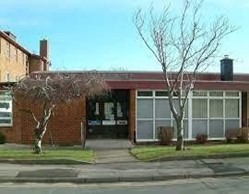
When I arrive, I will give my name at the reception desk. I will then wait in a room like this.
I will meet the adults named on the appointment letter. They will say ‘hello’.
My parent(s) will go to a room like this to talk to one of the adults.
I will go into a different room with the other adult.
There will be pictures and puzzles to look at.
There will also be opportunity to talk. I can choose what to talk about.
The adult I talk to will make some notes. This is so they can write a report.
When I have finished, I will wait for my parent(s)/adults who came with me, to finish talking to the other adult.
There might be time for me to do something of my own choice, or I can bring an activity to do while I wait.When my parent(s) have finished it will be time to find the way out and say ‘Goodbye’
The adults who have met me and my parent(s) will write a report together.The report will be written to help people understand me better. It will talk about my strengths as well as things I find difficult.
My parent(s) will be emailed a copy of the report.
Everyone involved in the assessment will be able to check the report before it is made into a final report.
We hope you find this information useful. We look forward to meeting you.
What happens when I come to visit Kingsley Resource Centre for an Autism Diagnostic Observation Schedule (ADOS) assessment?
Kingsley Resource Centre is located in the middle of
Cherrybank Resource Centre (CH65 0BY)
and Coronation Road Workplace Hub (CH65 9AB).
There is a pay and display carpark at the library, which is £1.00 for 2 hours (opposite Coronation Road)
Or ASDA (fee payable)
OR use the free (up to 4 hours maximum) car park at Whitby Park (CH65 9AQ), which is within 5 minutes’ walk.
When I arrive, I will give my name at the reception desk. I will then wait in a room like this.
I will meet the adult named on the appointment letter. They will say ‘hello’.
I will go into a room with the adult.
There will be pictures and puzzles to look at.
There will also be opportunity to talk. I can choose what to talk about.
The adult I talk to will make some notes. This is so they can write a report.
When I have finished, I will go and find my parent(s)/adults who came with me.
It will be time to find the way out and say ‘Goodbye’
The adults who have met me and my parent(s) will write a report together.The report will be written to help people understand me better. It will talk about my strengths as well as things I find difficult.
My parent(s) will be emailed a copy of the report.
Everyone involved in the assessment will be able to check the report before it is made into a final report.
We hope you find this information useful. We look forward to meeting you.
Eastway autism appointments
What happens when I come to visit the Eastway Building for a one-day autism assessment?
The Eastway Building is at the Countess of Chester Health Park on Liverpool Road in Chester (CH21BQ)
There is parking available on site.
When I arrive, I will give my name at the reception desk. I will then wait in a room like this.
I will meet the adults named on the appointment letter. They will say ‘hello’.
My parent(s) will go to a room like this to talk to one of the adults.
I will go into a different room with the other adult.
There will be pictures and puzzles to look at.
There will also be opportunity to talk. I can choose what to talk about.
The adult I talk to will make some notes. This is so they can write a report.
When I have finished, I will wait for my parent(s)/adults who came with me, to finish talking to the other adult.
There might be time for me to do something of my own choice, or I can bring an activity to do while I wait.When my parent(s) have finished it will be time to find the way out and say ‘Goodbye’
The adults who have met me and my parent(s) will write a report together.The report will be written to help people understand me better. It will talk about my strengths as well as things I find difficult.
My parent(s) will be emailed a copy of the report.
Everyone involved in the assessment will be able to check the report before it is made into a final report.
We hope you find this information useful. We look forward to meeting you.
What happens when I come to visit the Eastway Building for an Autism Diagnostic Observation Schedule (ADOS) assessment?
The Eastway Building is at the Countess of Chester Health Park on Liverpool Road in Chester (CH21BQ)
There is parking available on site.
When I arrive, I will give my name at the reception desk. I will then wait in a room like this.
I will meet the adult named on the appointment letter. They will say ‘hello’.
I will go into a room with the adult.
There will be pictures and puzzles to look at.
There will also be opportunity to talk. I can choose what to talk about.
The adult I talk to will make some notes. This is so they can write a report.
When I have finished, I will go and find my parent(s)/adults who came with me.
It will be time to find the way out and say ‘Goodbye’
The adults who have met me and my parent(s) will write a report together.The report will be written to help people understand me better. It will talk about my strengths as well as things I find difficult.
My parent(s) will be emailed a copy of the report.
Everyone involved in the assessment will be able to check the report before it is made into a final report.
We hope you find this information useful. We look forward to meeting you.
Elm House autism appointments
Hospital Passports
Please click on the links below for hospital passports at your local hospital.
Mid Cheshire Hospitals NHS Foundation Trust (MCHFT)
Mid Cheshire Hospitals NHS Foundation Trust (MCHFT) Easy Read with symbols
Countess of Chester Hospital Foundation Trust
Wirral University Teaching Hospital NHS Foundation Trust (WUTH)