What is a referral?
A referral is a request from a doctor, school nurse, social worker, family member, or from the young person themselves, to access help from Children and Young People's Mental Health Services (CYPMHS) - formerly known as CAMHS - for the child or young person, and their family.
When might a child be referred to CYPMHS?
If you have concerns about your child's mental health and emotional wellbeing, getting advice from a professional can help you to understand whether your child might need specialist support. Either your doctor, your child's school nurse, or their social worker if they have one, are all good places to start; they will ask you about the problems your child is having so that they can advise you on what sort of help is needed. If they think CYPMHS is the best service to help, then they will ask for us to see you and your child. You can also self-refer using the online forms linked below.
It could also be that somebody else suggests that your child might need extra help, because they've noticed behaviours that cause them concern.
How do I refer a child to CYPMHS?
CYPMHS is for young people presenting with a moderate to severe mental health difficulty and we therefore need to gather as much information as possible to understand their need and whether their difficulties are having a significant impact upon their day to day functioning.
The more information you are able to provide on the self-referral form, the more likely we are able to accept the referral or signpost you to more appropriate services.
If you live in Wirral
If you (or the young person who needs support) lives in Wirral, you can make a self-referral into Wirral Children and Young People's Mental Health Services (CYPMHS) using the button below.
If you live in Cheshire
If you (or the young person who needs support) lives in Cheshire East or Cheshire West and Chester, you can make a self-referral into Cheshire Children and Young People's Mental Health Services (CYPMHS) using the button below.
If you are referring for ADHD or autism diagnosis in Cheshire please look at the ADHD and Autism service
What happens after a child is referred?
Information on referrals to Cheshire and Wirral services has been developed in response to feedback from parent/carer participation groups. We will always be happy to answer your questions; and if our answer isn’t clear to you, then we want you to ask us again. Find out more about what happens by using the button below.
Coming to your mental health sessions helps you get better.
- When you come to your sessions often, you and your worker can get to know and trust each other.
- This is the best way to get the most out of sessions
- Each session helps you more.
- Each time you meet, it helps with what you talked about last time.
- Going regularly helps you remember what you learn and sort out problems as they happen.
- If you miss sessions, It can be harder to reach your goals.
- If you keep missing sessions - it may not be the right time to get what you need
In the event that you miss 2 appointments or there is an ongoing pattern of not keeping appointments:
- Your care team will decide if you should be discharged from the service.
If you feel like you can come to meetings regularly in the future, you can ask to be referred again.
Sometimes students might be present in your session.
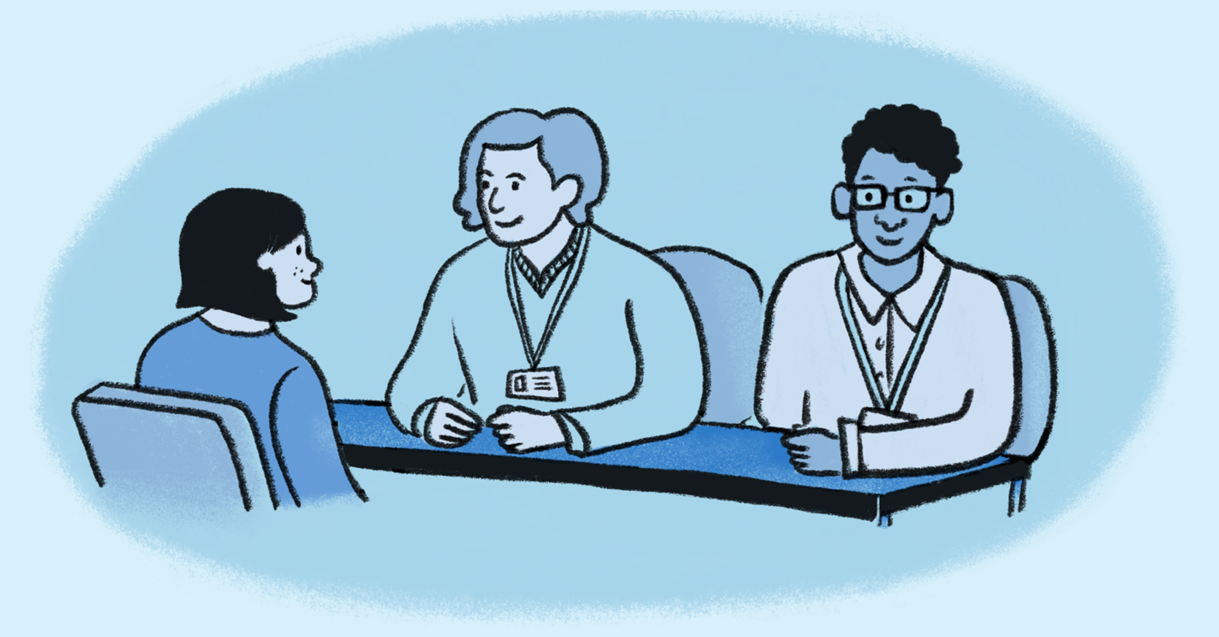
This is so that they can learn from your visit.
During the session they might:
 Observe the session
 Support you in your care
 Ask questions
If you would prefer a student was not present, please let reception know.
Why do we collect information about protected characteristics?
We gather information about protected characteristics, like age, gender, race, and disability status, to ensure everyone is treated fairly and equally. This helps us to:
- Understand diversity: We learn about the different kinds of people in our community.
- Prevent discrimination: By knowing who people are, we can make sure no one is treated unfairly because of their differences.
- Improve services: We can create better programs and services that meet the needs of everyone.
- Create inclusive spaces: We want to make places where everyone feels welcome and included.
Below you can watch a short video explaining more about protected characteristics and why it's important that we ask about them:
Confidentiality
At the age of 16 young people have a legal right to access our services independently and confidentially. For under 16's there are also some rare situations where young people may access our services without parent/carer knowledge.
When a worker or organisation says that a young person can speak to them confidentially, this means what they talk about will be kept as private as possible, and that they won't, unless they are very worried about the young person's safety or the safety of others, tell anyone else what they say.
The rules on confidentiality are different depending on age, but at CYPMHS we always try to get permission before sharing information about young people.
CYPMHS workers are able to help at any time with questions about confidentiality.
Who knows I'm seeing CYPMHS?
To start with, the only people that know you're seeing CYPMHS are you, your parents/carers, your doctor and the person that asked us to see you (e.g. your school nurse); unless you choose to tell others. If we need to talk to anybody else, we will always try to ask you first.
Why do my parents/carers need to know?
This is because your parents are legally responsible for you until you are 16 years old, so we need to ask them before we can help you. But seeing CYPMHS can help them too, they can learn ways to help solve problems and support you better.
There are some rare situations where your parents/carers might not need to know; your CYPMHS worker will discuss this with you.
When might you want to talk to someone else?
We do sometimes need to talk about your worries with:
- Other people who know you e.g. your teacher or social worker, if we need more information about the difficulties you are having.
- Other people in CYPMHS, so they can help us to help you.
- Your doctor and the person who asked us to see you, to tell them a bit about your problems and what we plan to do.
If we are really worried about your safety, or someone else's safety, we may have to tell somebody outside of our team, but we will try our best to speak to you first.
Who knows I'm seeing CYPMHS?
To start with, the only people that know you're seeing CYPMHS are you, your doctor and the person that asked us to see you (e.g. your school nurse); unless you choose to tell others. If we need to talk to anybody else, we will always try to ask you first.
Do my parents/carers need to know?
Once you turn 16, you have a legal right to confidentiality (privacy) and to give consent (agree) or refuse consent (refuse) for your own treatment, without the need to involve your parents/carers. But it can be useful to involve your parents/carers, so that you can listen to their views and they may be able to support you. The difference when you reach 16 is that you make the final decisions.
When might you want to talk to someone else?
We do sometimes need to talk about your worries with:
- Other people who know you e.g. your teacher or social worker, if we need more information about the difficulties you are having.
- Other people in CYPMHS, so they can help us to help you.
- Your doctor and the person who asked us to see you, to tell them a bit about your problems and what we plan to do
If we are really worried about your safety, or someone else's safety, we may have to tell somebody outside of our team, but we will try our best to speak to you first.